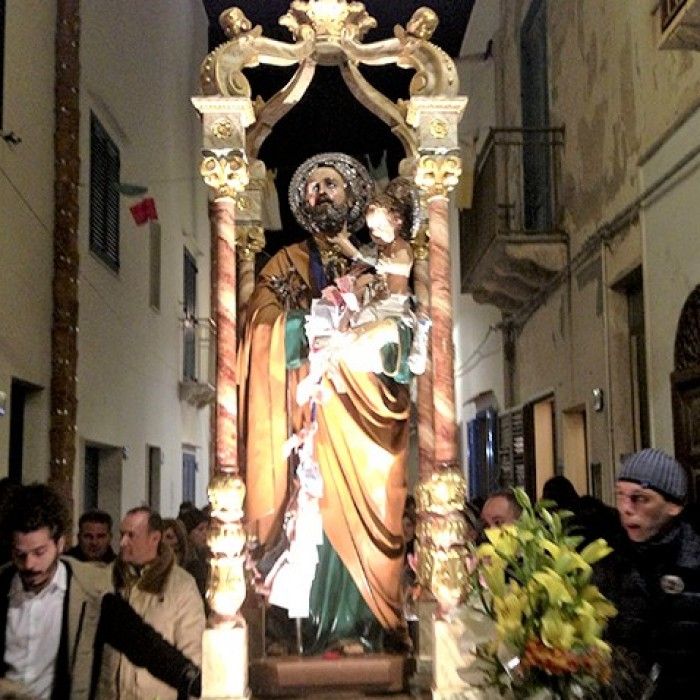
The beginning of spring in the Trapani area is marked by a very heartfelt festivity in various centers of the province: the feast of San Giuseppe.
Certainly the most important anniversary for the community of Marettimo, the most distant of the Egadi islands, where every year, on March 19th, various initiatives are organized in honor of the patron saint.

The religious event attracts many visitors, as well as seafarers scattered all over the world who return to their island for the celebrations.
In many cases also directly from America, from Monteray to be precise, where many Egadians who emigrated to California many years ago live.
So much so that in the same period, a celebration very similar to that of Marettimo is also held in Monterey.

But the Egadine procession, truly beautiful and evocative, also attracts many tourists, who remain fascinated by the various moments of this anniversary. Made up of ancient rites that are handed down from father to son. Characterizing a generational bridge that seems to resist even the new lifestyles of modernity and which unites the sense of belonging of an entire community.

The celebrations open with the traditional " Dimuniara ", the three fires, representing the Holy Family, lit just outside the town, with the cry of "Long live Patriarch St. Joseph... long live!".
The ceremonies come to life the next day: after the holy mass, the rite of the Alloggiate and the Admitata ai Santi is held in the square.
First the "tuppuliate" in the door of the small church of Santa Maria delle Grazie to remember the denied welcome to the Holy Family.
But the door opens with the sound of a band and the ringing of the bells at the third "tuppuliata".

At this moment the celebrations officially open, with the three characters representing the "Saints", namely Jesus, Joseph and Mary , who are made to climb onto the stage decorated with thyme to be fed the dishes prepared by the women of the island, while The " Divuzione " is held in the square, i.e. the distribution of sweets typical of the feast of San Giuseppe, starting with the pignolo, the cubaida and the "petramennula".
But also graffe, cannoli and many other delights based on ricotta or custard. After the Admiration of the Saints and the "Divuzione", the procession leaves with the characters of the Holy Family accompanied by the faithful first towards the old port and then to the new port, the two ports of the island.

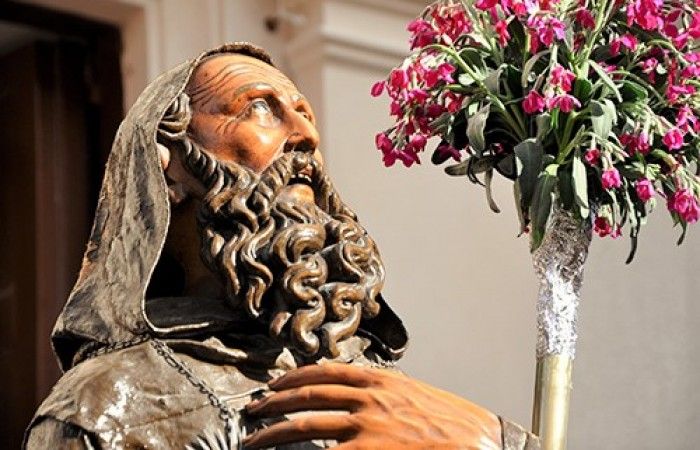
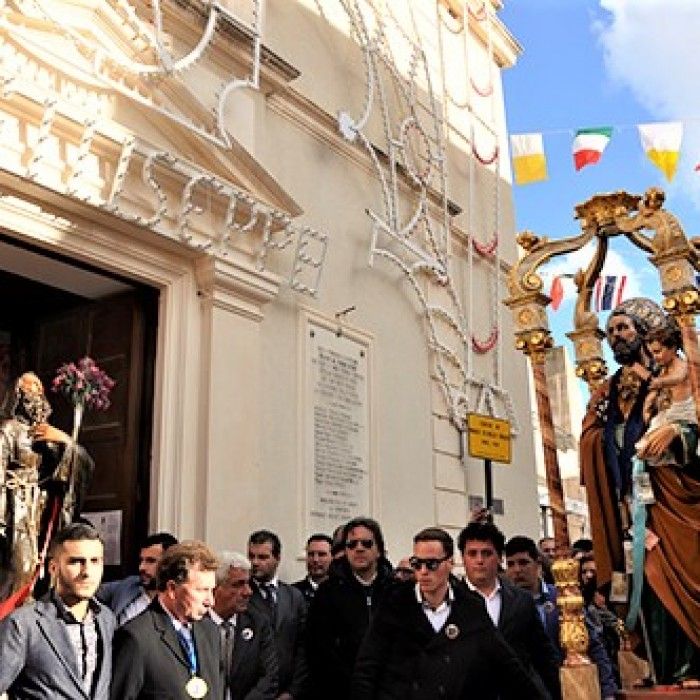
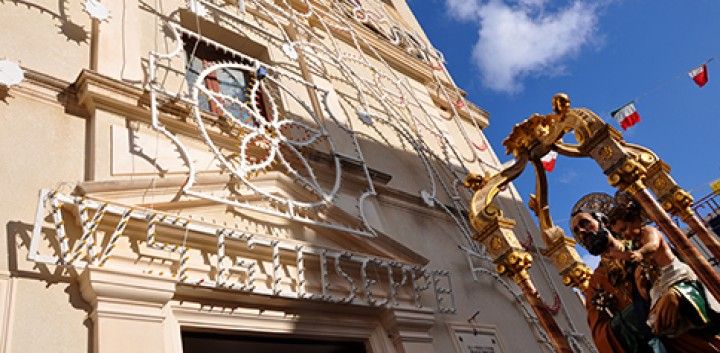
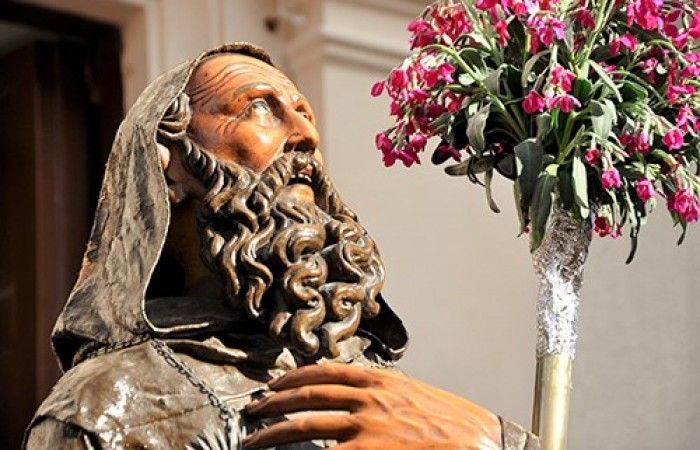
After the traditional and abandoning lunch of the seafaring families, in the afternoon the wonderful image of Saint Joseph with Baby Jesus in his arms comes out in procession, followed by the icon of Saint Francis of Paola, called by fishermen and seafarers "Santu Patre", protector of the people of the sea to which seafarers, for obvious reasons, being mostly fishermen or seafarers, are particularly attached. After having walked through all the streets of Marettimo, accompanied by the faithful and the notes of the musical band, stopping in front of the houses to allow the faithful to leave their monetary offerings on the "sirraculo", the two images of San Giuseppe and San Francesco di Paola in in the evening they return to the small church.

During the procession the traditional panuzzi of San Giuseppe are distributed: it is said that, in the event of a storm, if thrown into the sea by a firstborn of a maritime family, reciting an Our Father, the sea calms down, with the waves suddenly losing their their strength. Ancient rites and customs handed down from father to son, always present in the Marettimari family code. Raised on bread and oars with the image of their Saint in their pockets, always and in any case.
Mario Torrente